
Intent Keywords: Purchase vs Research on Instagram
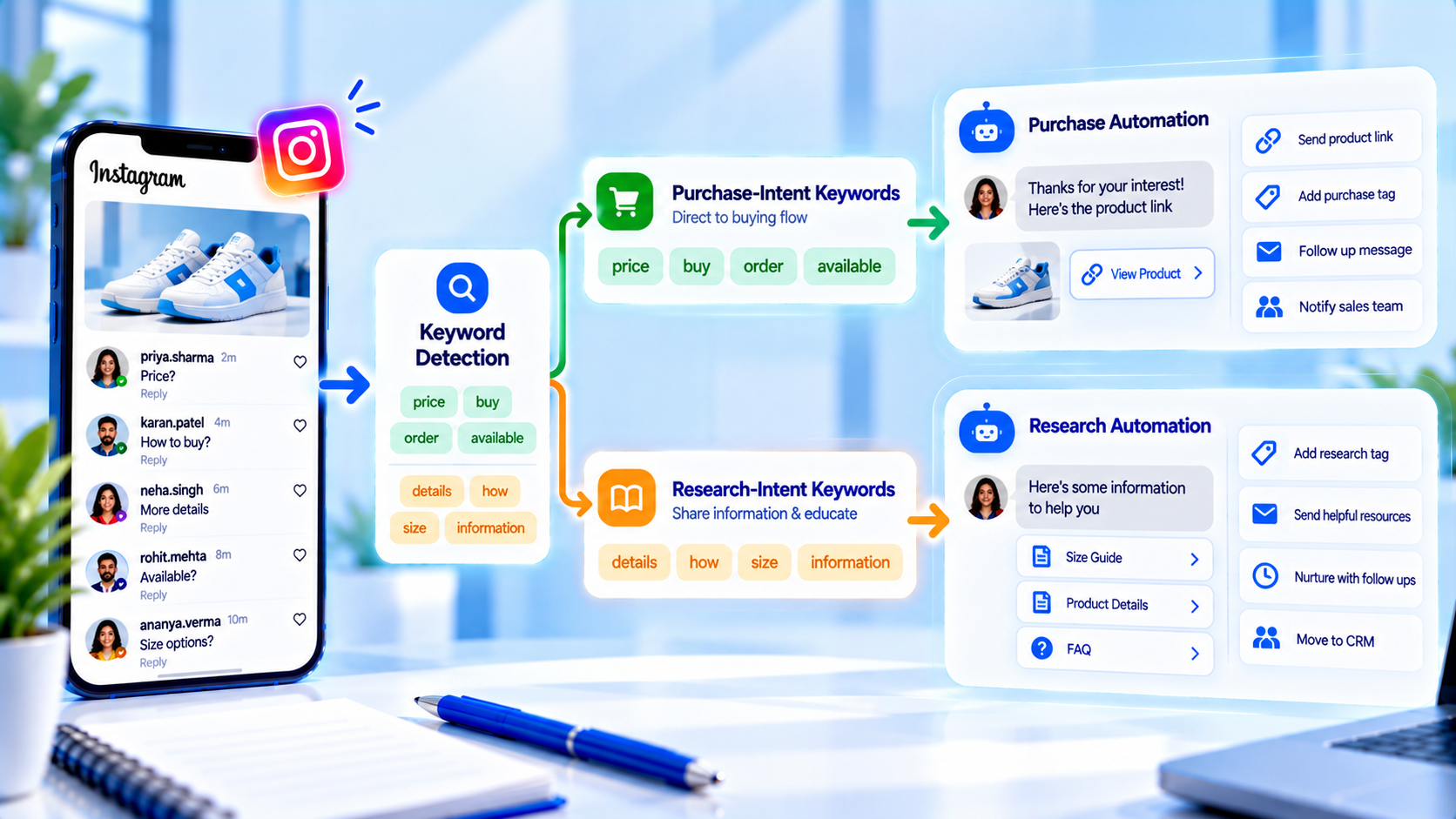
Which words people comment is already a content piece: keyword triggers that actually get commented. This article is intent mapping — purchase versus research — so one post can teach two words without colliding automations. PRICE and DEMO are not the same job as GUIDE. Match types: contains vs exact.
Usually PRICE and GUIDE should not share one automation. Different DMs, different tags, different humans. Do not teach BUY if the DM is a newsletter. Do not drop researchers on a closer.
Collisions on multi-offer posts: keyword strategy for multi-offer posts. Tags: tag by intent. Shop-shaped words: SIZE, RESTOCK, PRICE.
Why PRICE and GUIDE are different jobs on the same post
Purchase-shaped comments want a next commercial step: a list, a checkout, a demo, a bookable slot. Research-shaped comments want an asset: a guide, a recipe, tips. One DM cannot be both without making one group feel baited and the other pestered.
Teams share one automation because it is faster to set up. The cost shows up in the inbox: sales reading GUIDE, or browsers getting Calendly. Split the words on screen if you will honour two jobs.
If you only have one job this week, teach one word. A second sticker you will not honour is how BUY becomes a newsletter. Wait for the next Reel to add GUIDE. Intent mapping is a content decision before it is a canvas decision.
How intent keywords map to separate automations
Purchase-shaped: PRICE, BUY, DEMO, BOOK, WHOLESALE, DROP — if that is what you will honour. Research-shaped: GUIDE, INFO, RECIPE, TIPS. Each keyword gets its own send, its own tag, and optionally its own human.
Contains match will collide (GUIDE inside “guideline”). Use match types on purpose. Two automations on the same comment is not how you split intent — that burns Private Reply. Split by teaching two words, not by stacking two rules on one comment.
Inbound DMs can use the same map. If someone types price in a message without commenting, that keyword can share the PRICE send and the price tag. Do not invent a third intent called “inbox” unless a human will filter it. Surface is not intent.
Comment and DM pairs for purchase versus research
- Comment PRICE. DM: published list or starting range you will honour. Tag price. Not the 40-page brand story.
- Comment DEMO. DM: what the demo is, timezone, length. Tag buy. Not a PDF dump.
- Comment BOOK. DM: 1:1 versus group named. Fit question. Tag book.
- Comment GUIDE. DM: the file or URL. Tag research. No closer.
- Comment RECIPE or TIPS. DM: the asset. If you also sell a course, a single optional button “Want the course outline?” is enough. Do not auto-pitch.
- Comment SIZE or RESTOCK. Operational purchase support, not a thought-leadership PDF. Honour the word.
- Comment INFO. Research. If INFO currently dumps checkout, you taught the wrong commercial step. Rename the sticker to PRICE or BUY if that is the real job.
- Comment DROP. Purchase-shaped only if a drop exists and the DM is waitlist or checkout. DROP that sends a memoir is a mismatched word.
Implementing two keywords on one post without collision
On-screen and in the caption: “Comment PRICE for the list, GUIDE for the PDF.” Two automations. Exact or tight contains. Test both from a second account.
If you only have one job this week, teach one word. A second keyword you will not honour is how BUY becomes a newsletter. Wait for the next Reel to add GUIDE.
Put both words on the sticker only when both automations are live and tested. A caption that says PRICE or GUIDE with one working keyword trains people to comment the dead word. Test comments from a second account for each word, follower and non-follower.
Multi-offer collisions (two checkouts, two magnets) are a planning problem — use the multi-offer keyword article rather than stuffing five words on one sticker.
Mistakes that share one DM for every word
- PRICE and GUIDE in one automation with the same brochure plus calendar.
- Teaching BUY for a lead magnet.
- Contains “info” catching every comment that says “thanks for the info.”
- Catch-all tagged buy.
- A shop word (SIZE) sending a coaching sales letter.
- Teaching DEMO when the DM is a PDF. That is GUIDE with a purchase costume.
- Using contains “book” so “workbook” and “booked” collide with BOOK.
Practices for teaching the words on screen
Burn the word in the Reel, not only in a caption people skip. One word per job. Spell it as you will match it.
If the audience mixes languages, pick words they will actually type. Do not auto-translate two intents into six keywords you cannot staff.
When the offer changes, change the on-screen word or the payload. Leaving GUIDE pointed at last month’s file is how trust dies.
Spell the word as you will match it. PRICE not “drop a 💰”. Emoji is a bad unique keyword. If the audience types in another script, pick the word they will actually type, and staff that inbox language. Do not auto-translate two intents into six unstaffed keywords.
A keyword-split workflow before you publish
- List jobs: file, list, booking, support. One word each, max two on this post.
- Write two first DMs. If they are the same paragraph, you do not have two jobs.
- Two automations, two tags, match types set.
- Follower and non-follower tests for both words.
- Inbox filters saved.
- Caption and sticker match the words exactly.
- After publish: one test comment per word. If the wrong DM arrives, fix match or payload before boosting.
When to stop adding Instagram intent keywords
Stop at two on a single post unless you have a real third job (for example SIZE on a product Reel). Stop when contains match is catching jokes. Stop when nobody staffs the extra tag.
Do not add keywords for Live comments, Trial Reels, Broadcast Channels, or Click-to-DM ads — those are not CommentLink comment triggers. Do not add a keyword whose DM is “message us on WhatsApp” as a silent hop off Instagram.
A shop Reel that teaches PRICE and GUIDE without collision
On screen: “PRICE for the list, GUIDE for the styling PDF.” Two automations. Exact or tight contains. Test both from a second account, follower and non-follower. If contains “guide” eats “guideline,” tighten match — do not add a third tag to catch leftovers.
Comment PRICE. DM: published ranges, tag price. Comment GUIDE. DM: the PDF, tag research, no closer. If both words appear in one comment, Instagram fires on what you matched. Teach “comment one word.” Stacking two rules on one comment burns the one Private Reply.
Bilingual intent words you will actually staff
If the Reel is in Hindi and people will type कीमत, put that word in the rule and send the same PRICE payload — or burn PRICE on screen in the language they read. Do not auto-translate two intents into six keywords nobody staffs. Emoji is a bad unique keyword. Spell the word as you will match it.
When the offer changes, change the on-screen word or the payload. Leaving GUIDE pointed at last month’s file is how trust dies. A second sticker you will not honour is how BUY becomes a newsletter. Wait for the next Reel to add the second job.
Keywords this map will not grow into
- Live comment triggers, Trial Reels modes, Broadcast Channel posting, Click-to-DM ads — not CommentLink comment triggers.
- A keyword whose only DM is “message us on WhatsApp” as a silent hop.
- BUY that delivers a newsletter.
- DEMO that is actually a PDF — that is GUIDE with a purchase costume.
- SIZE sending a coaching sales letter.
FAQ
Should PRICE and GUIDE share one automation?
Usually no. Different DMs, different tags, different humans. Sharing one send trains sales to live in research threads and trains researchers to expect a pitch.
Can one Reel teach both words?
Yes, if the caption and sticker are clear and you built two automations. If the sticker only shows one word, do not expect the other.
What if they comment both words?
Instagram fires on the comment text you matched. Tighten match so one comment does not hit both rules. Teach “comment one word.”
Is DEMO purchase or research?
If you will staff a demo, treat it as purchase-shaped. If DEMO currently sends a PDF, you taught the wrong word — use GUIDE for the PDF.
Should I use BUY?
Only if the DM is a purchase step you honour. BUY that delivers a newsletter is bait.
How do shop keywords fit?
SIZE, RESTOCK, PRICE are operational. They are not GUIDE. Keep them on product posts and send the operational payload. See the ecommerce keyword article for those words.
Can कीमत and PRICE share one send?
Yes if they are the same job. One payload, one tag. Do not invent a third intent called “Hindi inbox.”
What if contains match fires both PRICE and GUIDE on one comment?
Tighten match types. Teach one word per comment. Two automations on one comment is not a split — it burns Private Reply.
Should I add a Live-comment keyword for purchase intent?
No. There is no Live comment trigger in CommentLink. Use feed or Reel comment-to-DM for on-demand media.
Related reading
Send the link in a private DM
Connect Instagram with Meta login and send a private DM when someone comments a keyword.
See comment-to-DMRelated articles
How to Attribute Sales with Coupons in Instagram DMs
Unique codes in automated DMs can beat UTMs when checkout is messy — if you rotate codes and accept some leakage.
How to Measure Instagram Keyword Trigger Performance
Retire weak keywords with evidence: matches, sends, replies, clicks — not vibes.
Instagram Comment-to-DM Conversion Rate Explained
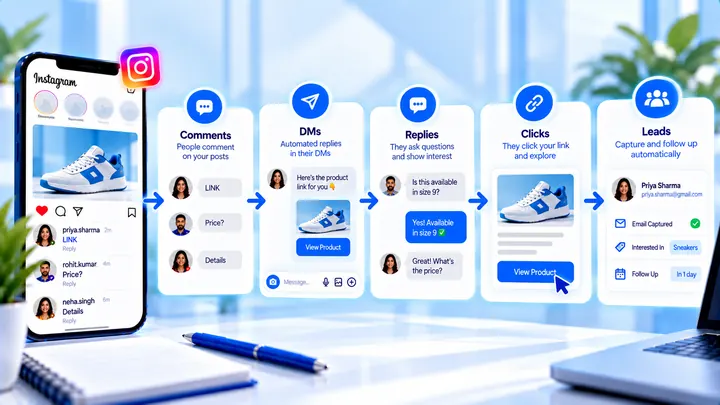
Pick a stage: comment→DM, DM→click, click→lead. Do not mix them into one “industry average.”