
How to Measure Leads from Instagram Comments
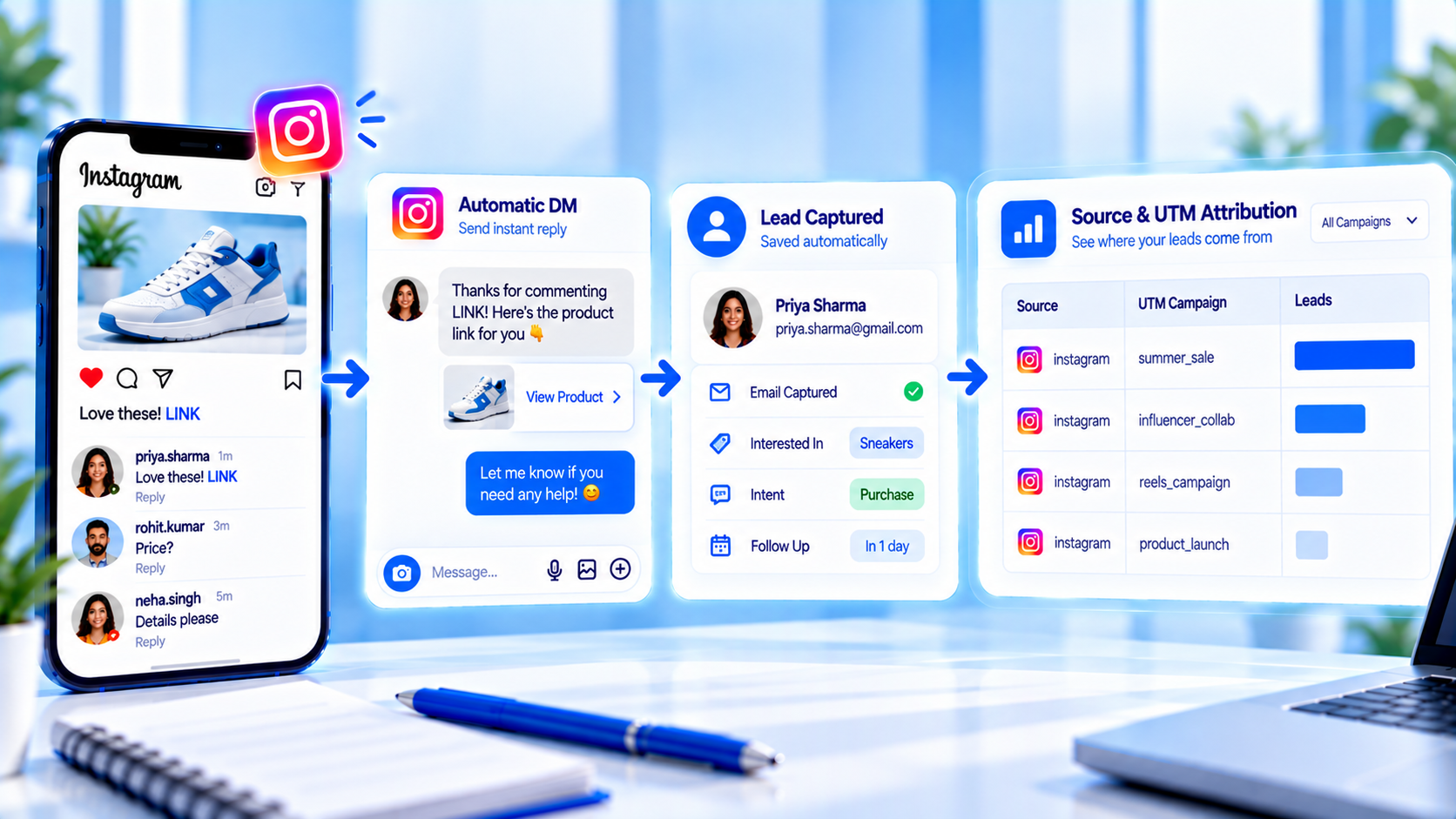
Comments are not leads. Measure leads from Instagram comments by counting contacts you stored or clicks you tagged. People comment jokes, tags, and the keyword by accident. A lead is a contact or a next step you can follow — an email, a phone you were given, a booking with a UTM, a purchase with a unique code.
Do not publish a “good” percentage. Your baseline is last week on the same kind of post. Comment volume without collected contacts is still just comments. Collection how-to: collect emails from comments. Value over time: Instagram automation ROI. Split by media, not “Instagram this month”: track Instagram DM leads by post.
Why comment count is the wrong conversion
A travelling Reel can produce thousands of comments and a handful of addresses. Celebrating the comment count trains the team to teach sloppy keywords and catch-all. The conversion you can defend is a stored contact or a tagged click you would still count if Instagram hid the thread.
This is also why vendor “industry averages” for comment-to-lead are mostly marketing. Different offers, different Request-folder rates, different definitions of lead. Name your definition. Leave percentages blank if you do not have a denominator you trust.
A good week is more stored contacts than last week on a similar post, or the same contacts with less overflow. It is not a number you copied from a roundup. If this Reel reached a colder audience, Requests will hide DMs and your lead count can fall while comments rise. That is placement plus definition, not proof comment-to-DM “stopped working.”
How a comment becomes a stored contact
Keyword matches. Private reply sends. Optionally they tap, reply, or complete COLLECT_EMAIL or COLLECT_PHONE. You store the address or number plus the source post. Optionally they click a UTM on a form you own. That form’s thank-you is the lead event — not the comment.
If you never collect and never tag a URL, you can still count replies that asked a buying question you will staff. Call those qualified conversations, not leads, unless you stored a way to follow up off-thread. Username-only is a weak follow-up plan.
Store the source post when the contact is created. “Instagram, August” is how you lose which Reel earned the list. The weekly scorecard is per post on purpose. Roll up later if you must. Do not start rolled up.
Comment and DM examples of leads versus noise
- Noise. Comment fire emoji. Catch-all fired. No keyword you taught. Not a lead.
- Not yet a lead. Comment LINK. DM sent. They never clicked and never gave email. Count a send, not a lead.
- Lead. Comment GUIDE. COLLECT_EMAIL completed. Address stored. Source: that Reel.
- Lead. Comment BOOK. They used the booking URL with a UTM. Event created. Source: that Reel.
- Lead. Comment PRICE. Unique discount code from the DM used at checkout you already operate. You can tie it. If you cannot tie it, skip the revenue row.
- Not a lead. Comment GUIDE. They asked a question in-thread and vanished. Useful conversation maybe. Not a contact you can email.
- Not a lead. Queued DM that never sent because the hour filled. That is overflow. Count it as unsent, not as a failed closer.
- Lead only if you can follow up: email collected, or a form thank-you with UTM, or a booking you can open in the calendar with the same source.
Implementing capture and source-post tracking
- Write the definition: email, phone, booking, or coded purchase.
- Put collect or a tagged URL in the flow that honours the keyword.
- Store the post or Reel as source. Do not roll everything into “Instagram.”
- Once a week, fill the scorecard for one post (or one keyword).
- Compare to last week’s similar post. Do not compare to a blog benchmark.
CommentLink is not a full attribution suite. Build the rest in your shop or analytics tool. Do not invent a comment-to-lead rate because a competitor slide had one.
If two keywords ran on one post, keep two scorecard rows or you will credit GUIDE for BOOK emails. The definition stays the same. The source is the post plus the word.
Mistakes that celebrate comments as conversions
- Reporting comment count as leads.
- Reporting DMs sent as leads.
- Reporting an Instagram DM open rate (mostly unmeasurable) as a lead proxy.
- A “good” conversion percentage with no stage named.
- Rolling every Reel into one monthly Instagram number so you cannot see which post worked.
- Counting fire-emoji catch-all as demand.
- Filling a blank sales row with a guess so the slide looks complete.
- Using last month’s Explore Reel as the baseline for a quiet grid post.
Practices for a weekly scorecard without fake benchmarks
One post at a time. Same columns every week. Blank cells allowed. No target copied from a vendor.
Separate matching comments from all comments. Separate DMs sent from leads. If the hour queued people, note it — that is overflow, not a conversion failure.
If you cannot tie sales, do not estimate. Time saved can live on the ROI article; this scorecard is leads, not a wage formula.
Keep the same six rows so a new teammate can fill the sheet without a meeting. If a row is always blank, you are not capturing that event — add collect or a UTM, or delete the row. Empty theatre columns are how fake benchmarks sneak back in.
A weekly scorecard template by post
Once a week, look at one post (or one keyword) and write down the rows below. Do not publish a “good” percentage. Your baseline is last week on the same kind of post.
- Comments that contained the trigger keyword you actually taught.
- DMs sent for those comments (including ones sitting in Message Requests).
- Qualified conversations — they answered the filter question, or they asked a buying question you will staff.
- Email or phone you collected in the thread, if you collect those.
- Tagged or clicked destinations, where the URL was measurable.
- Sales or booked calls you can tie to that post (UTM, unique code, or a note). Skip the row if you cannot tie it.
Raw comment count is optional context in a footnote, not the headline. People comment jokes, tags, and the keyword by accident. A lead is a contact or a next step you can follow.
Do not add an “open rate” column. Instagram does not give comment-to-DM tools that metric. Replies can sit on the sheet as findability, not as opens. No invented “good” percentage next to any row.
When to stop measuring vanity volume
Stop putting comment count on the same slide as revenue. Stop asking for an industry-average comment-to-lead rate. Stop measuring every Reel as one Instagram bucket. Stop when the scorecard has more columns than you fill.
Keep the weekly habit for the posts you boost. If you cannot staff collect, do not add the node just to make a lead column. Comments are still not leads. CommentLink will not turn them into HubSpot deals, Shopify orders, or WhatsApp chats because someone typed a word.
FAQ
How do I track Instagram comment leads?
Decide what a lead is, collect it in the DM or on a tagged URL, and store the source post. Comments are not leads. Compare this week to last week on a similar post — not to a vendor average.
Are comments leads if they used the keyword?
No. The keyword is a trigger. A lead is a stored contact or a next step you can follow. Keyword comments are the top of a funnel you still have to measure.
What belongs on the weekly scorecard?
Keyword comments, DMs sent, qualified conversations, collected email or phone, tagged clicks, and sales you can tie. No invented benchmarks. Compare to last week.
What if I cannot attribute a sale?
Leave the sales row blank. Do not estimate a multiplier. Attribution you cannot defend is worse than a blank.
Can I use open rate as a lead proxy?
No. Instagram does not give automation tools a standard DM open rate. Track replies, tagged clicks, and stored contacts.
Should I report one Instagram lead number per month?
Prefer by post. A monthly rollup hides which Reel created contacts. If you roll up, still keep the per-post scorecard as the source.
Related reading
Send the link in a private DM
Connect Instagram with Meta login and send a private DM when someone comments a keyword.
See comment-to-DMRelated articles
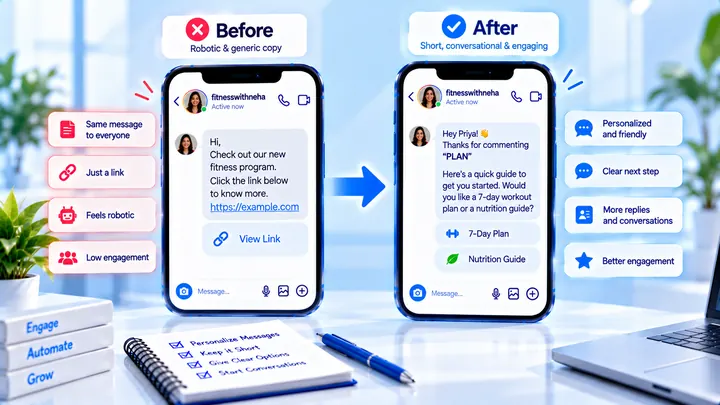
How to Write Automated Instagram DMs That Feel Human
Write human-sounding Instagram automated DMs: short openers, the promised next step, and a CTA that invites a reply — not a pitch wall.
How to Attribute Sales with Coupons in Instagram DMs
Unique codes in automated DMs can beat UTMs when checkout is messy — if you rotate codes and accept some leakage.
Instagram Automation Dashboard: What to Track Weekly
A weekly checklist: connection health, queue depth, failed sends, and one campaign metric — not 40 vanity charts.