
Human Handoff Workflow Design for Instagram DMs
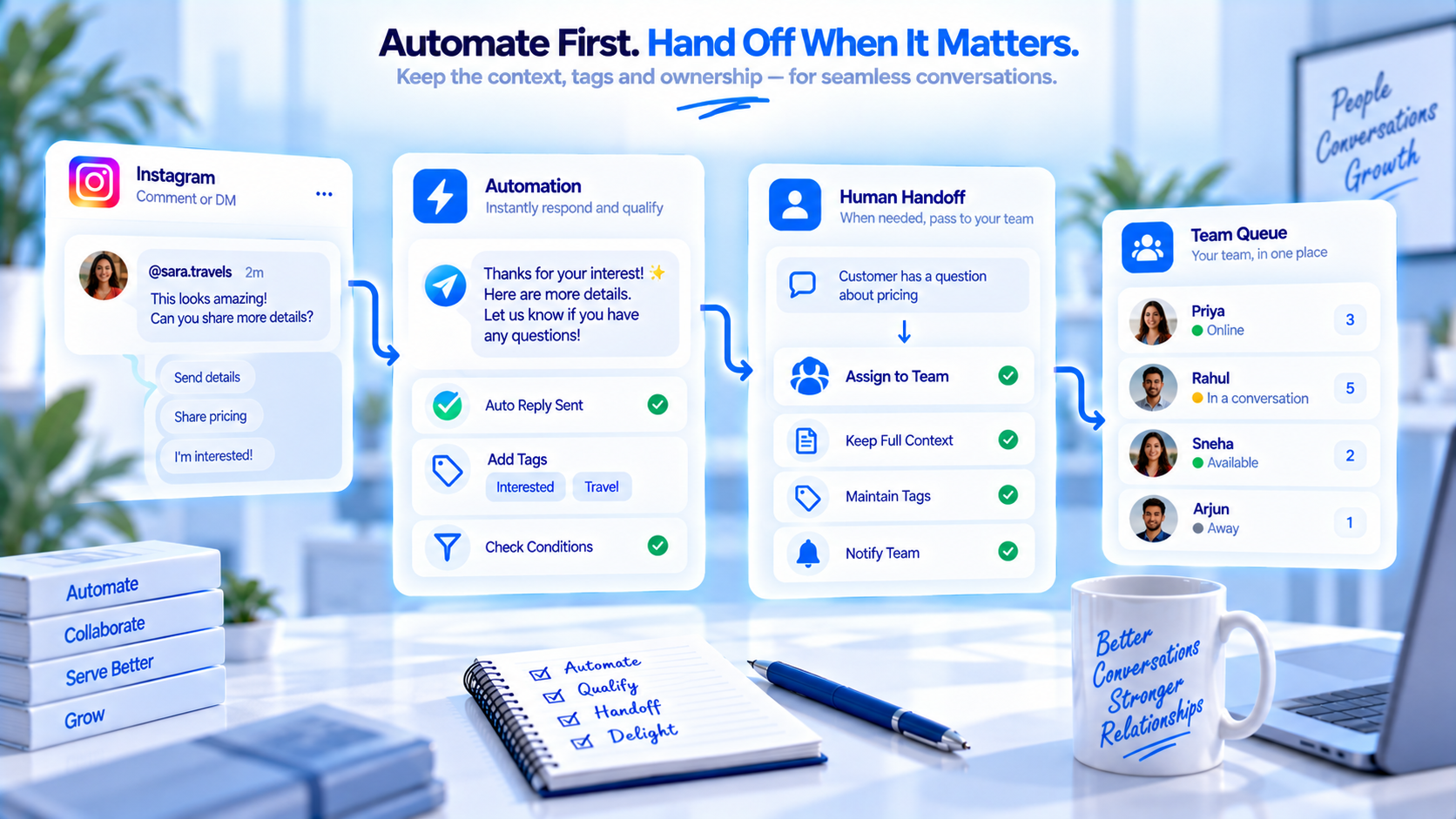
A comment-to-DM rule can send the brochure. It cannot take a refund, a custom quote, or a person who is already angry. Human handoff is the operations design that decides when the automation stops, who owns the thread, and what that person sees in the inbox. CommentLink has a human-handoff node and a shared inbox. It does not staff a night shift, invent an SLA, or assign the right specialist if you never wrote the rule.
This article is the stop itself: the last automated line, the tag, the assignment, and the coverage note when nobody is online. If you need the if/then list of when a lead is ready for a closer, use the companion on sales handoff criteria. Criteria without a workflow dump threads into a pile. A workflow without criteria dumps them onto whoever happens to be logged in.
What human handoff actually is on Instagram
Handoff is not a personality setting. It is a deliberate stop: the automation sends one last useful line, tags the contact, and puts the thread where a named person can pick it up. Until that stop, the person is talking to a rule. After that stop, they should not get another automated bubble that pretends a specialist is typing.
CommentLink can stop a flow with a human-handoff node and surface the thread in a shared inbox. Staffing, hours, and response-time promises are yours. If the inbox is empty at 11pm, the honest last line is “we are back at 10am,” not a fake typing indicator. Team routing lives with team inbox and assignment; this piece is the handoff design those tools need.
- They asked for a person, a manager, or a phone call.
- They failed the same fallback twice.
- The tag is high-ticket, legal, medical, or refund.
- They mentioned a deadline, a complaint, or a number you do not publish.
How a thread moves from rule to staff
Treat the path as a sequence you can draw on one page. If a step is missing, the bot either loops or the human opens a mystery thread.
- The comment, Story reply, or inbound DM matches a keyword you taught.
- The automation sends the promised asset or asks the one question you actually use.
- A condition or keyword (HUMAN, CALL, PRICE, ISSUE) decides whether the next node is more automation or a stop.
- The human-handoff node fires: last line, tag, optional assignment.
- Staff see keyword, media, tags, and collected fields — not a blank chat.
- A person replies in the shared inbox. The flow does not resume unless you designed a later trigger they write themselves.
Comments and DMs that should stop the bot
Write the stop in the same voice as the first DM. The person should feel a baton pass, not a cliff.
Interior studio, comment: “PRICE for the 3BHK in Koramangala.” First DM can send the floor plan they asked for. If they reply “need a custom quote for a 4BHK resale,” that is not another PDF. Last automated line: “A senior advisor will take this — we are on until 7pm IST. Reply with your timeline and we’ll pick it up.” Tag: high-ticket. Do not auto-send a second listing pack.
Clinic, comment: “BOOK laser.” First DM: scheduler link. Reply: “the last session burned, I want a refund.” Public reply stays quiet. Last DM: “I’m handing this to the clinic manager. Please do not send photos in-thread if you can; we will ask for what we need.” Tag: complaint. Automation off.
SaaS, comment: “DEMO.” First DM: calendar. Reply: “procurement wants a DPA and a custom MSA this week.” Last line: “That’s a human thread. I’ll assign legal + AE. If nobody replies in two hours during IST business hours, ping us again.”
Implementing handoff without a fake SLA
- List the five phrases that must never get a second automated pitch (refund, lawyer, harassment, medical, custom price).
- Map each phrase to a tag and, if you have staff, an assignee or inbox filter.
- Write the last automated sentence with coverage hours in it.
- Put keyword, post permalink, and collected email/phone on the contact so the human does not interrogate them again.
- Test with a second account: comment, fail the qualify, ask for a human, confirm the flow stopped.
- If you also run WhatsApp in the same workspace, keep the same owner — see Instagram and WhatsApp shared inbox.
Handoff mistakes that leave leads in limbo
- Stopping with no last line. They think the bot crashed. Instead: one sentence that names a person or a time window.
- Handing off every PRICE comment. Staff drown. Instead: send the public price sheet first; hand off only custom numbers.
- No tag. The inbox is a river. Instead: tag at the stop so filters work.
- Continuing AI reply after handoff. They get two voices. Instead: the handoff node is the last automated bubble.
- Promising “someone will message in 2 minutes” with nobody rostered. Instead: state hours you actually cover.
- Hiding the original comment. Staff ask “which flat?” Instead: keep media and keyword on the contact.
- Using handoff as a dumping ground for bad keywords. Instead: fix the keyword map; handoff is for exceptions.
Inbox habits that keep ownership clear
One owner per thread. If two people reply, the lead gets two calendars. Assignment rules belong in shared inbox assignment; the habit here is: whoever is assigned sends the next message.
- Publish coverage in the last bot line, not only in an internal doc.
- Reuse the same stop phrases across Reels so staff learn the pattern.
- Keep the first human reply short: acknowledge the ask, then the next step.
- Do not re-open automation on a complaint tag without a manager override.
- Review unassigned handoffs once a day. Unowned threads are silent churn.
Copyable handoff runbook
Trigger: comment or DM contains CALL, HUMAN, MANAGER, REFUND, or fails qualify twice. Action: send last line → tag → human-handoff → stop.
Last line template: “Got it — I’m passing you to [role]. We are on [days/hours timezone]. If this is urgent and we are closed, [one true alternative: voicemail, form, next-morning].”
Staff opener template: “I have your comment on [Reel topic] and the [asset] we sent. You’re asking [repeat their words]. Next step is [call / visit / ticket].”
Do not put a second link in the last bot line unless that link is the ticket form you actually staff.
Coverage gaps: when nobody should auto-reply
If the inbox is unstaffed, a clever flow still creates expectation. Pause the keyword on sold-out nights, after a PR incident, or when the only person who can quote is on leave. A paused rule is kinder than a handoff into an empty queue.
Legal, medical, and refund language should never get a promotional follow-up even if they also commented LINK. The stop is the product. The human is the service.
FAQ
Does CommentLink have human handoff?
Yes — a human-handoff node and a shared inbox. Staffing, hours, and SLAs are yours. The node stops the bot; it does not invent a roster.
What should the last automated message say?
Name the stop, name a window you actually cover, and do not send another pitch. If nobody is on, say so.
Should every PRICE comment go to sales?
No. Send the public sheet first. Hand off when they ask for a number you do not publish or a custom scope.
Can the bot come back after a human replies?
Only if you designed a later trigger they write themselves. Do not resume a pitch on a complaint tag.
What does staff need on the contact?
Keyword, media, tags, and any email or phone you collected. Not a blank thread.
Is handoff the same as assignment?
Handoff stops automation. Assignment chooses who sees the thread. You usually want both.
Related reading
See the rest of the workspace
Inbox, flows, broadcasts and WhatsApp sit next to Instagram comment automations.
See featuresRelated articles
Instagram Automation Dashboard: What to Track Weekly
A weekly checklist: connection health, queue depth, failed sends, and one campaign metric — not 40 vanity charts.
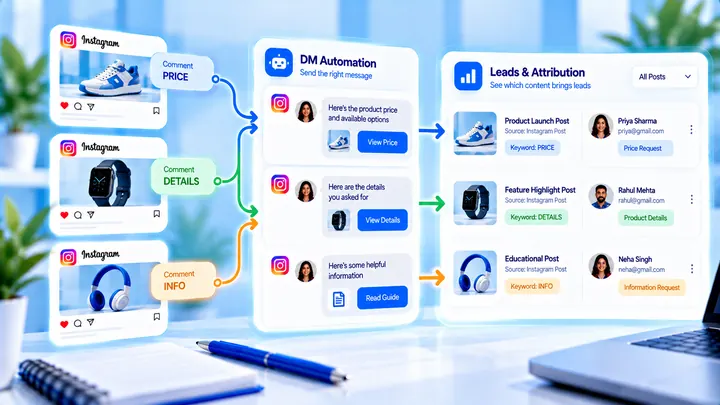
How to Track Instagram DM Leads by Post
Know which Reel created conversations — name campaigns, use UTMs, and do not mix every keyword into one bucket.
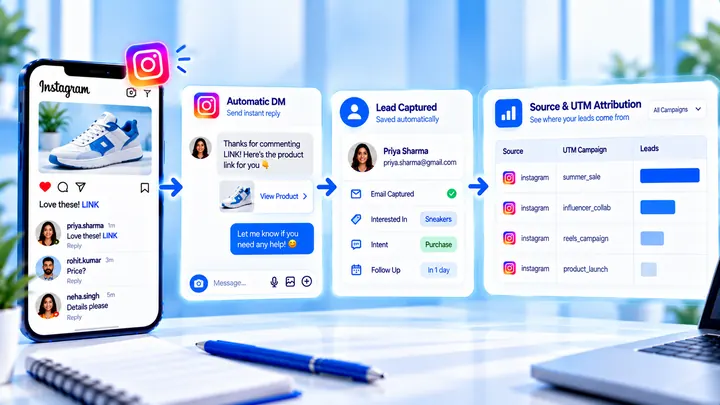
How to Measure Leads from Instagram Comments
A lead from a comment is a contact you can follow up — not a comment count. Wire keyword → DM → email or UTM before you celebrate.